cmd.ms Microsoft Cloud Command Line for Browsers
Last Updated on 20. May 2026
Navigating Microsoft portals is often inefficient. Changing user interfaces and deeply nested blades cause administrators to spend unnecessary time searching for specific settings. cmd.ms provides a simple solution: direct access to portals and blades via the browser address bar. cmd.ms acts as a Microsoft Cloud command line for browsers.
cmd.ms provides an extensive command library, supports multiple Microsoft workloads such as Microsoft Entra, Intune, Defender, and Microsoft Purview, and enables a consistent keyboard-first approach.
This article outlines how cmd.ms is used and the practical benefits it provides in day-to-day operations.
Using the cmd.ms Website
The website https://cmd.ms serves as a central overview and entry point for all available commands. It allows targeted search and direct access to Microsoft portals and blades. The homepage provides an overview of available commands and includes a search function.
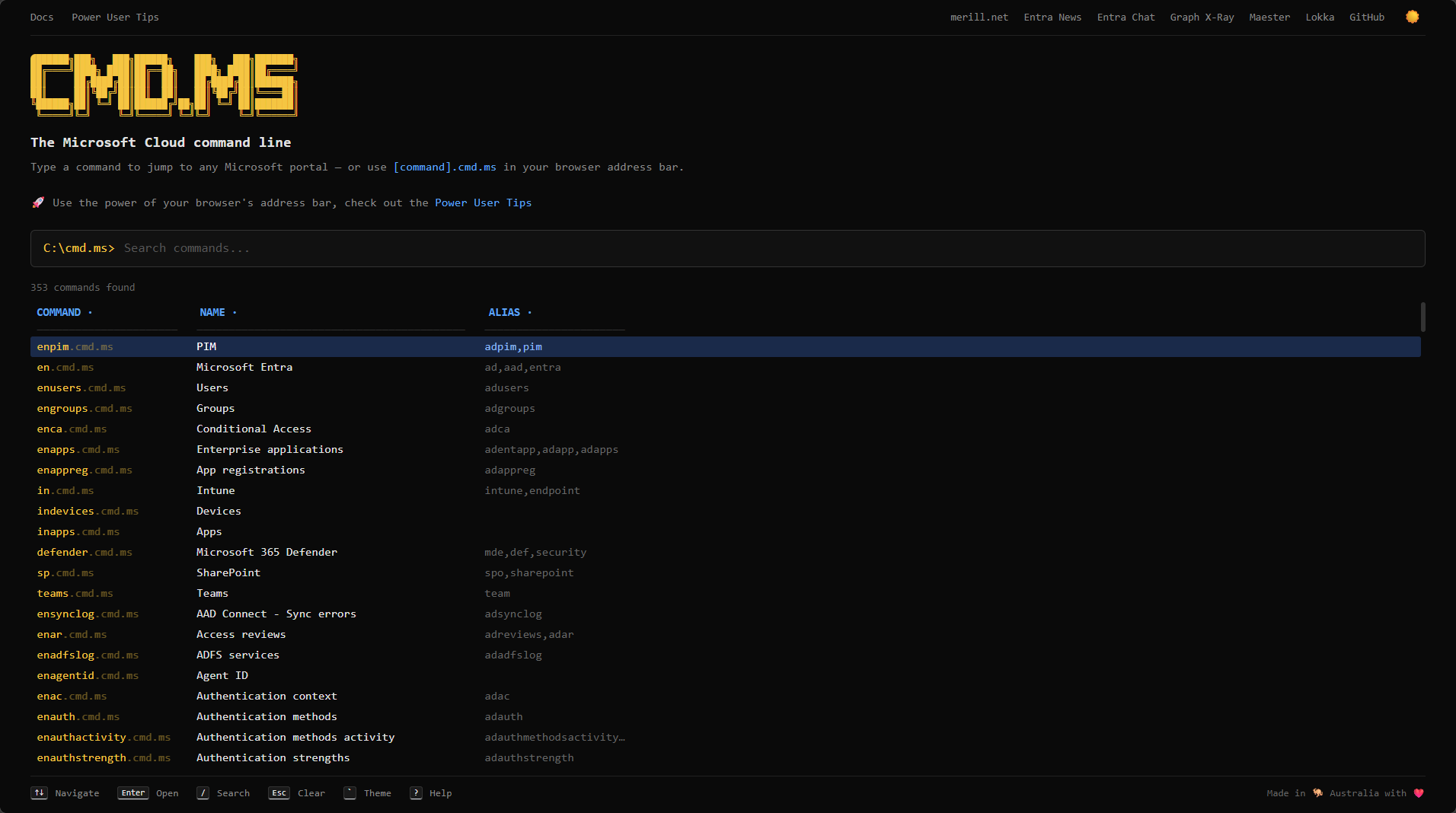
A search can be used to find a specific portal or blade.
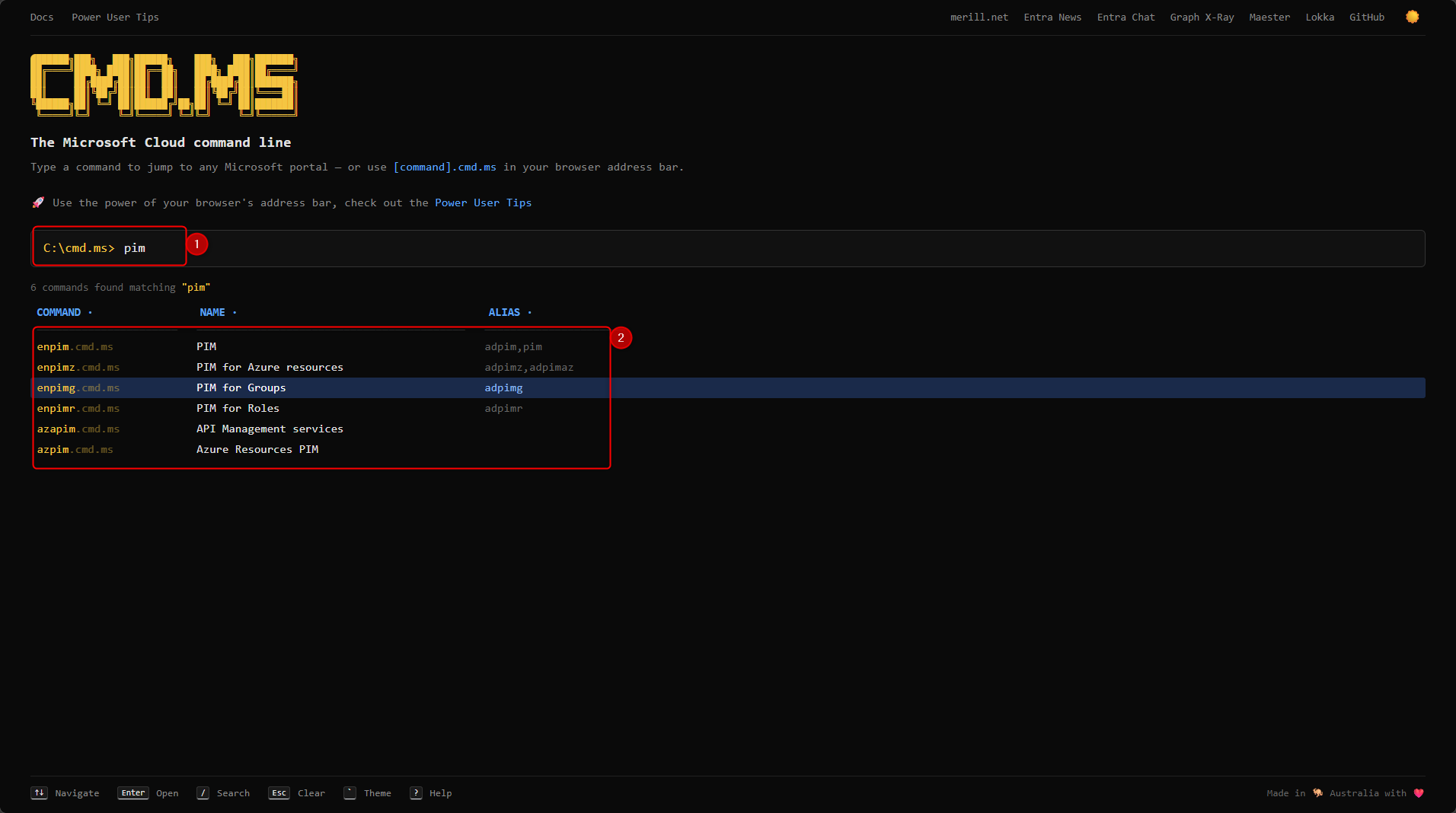
The following example shows how to access Privileged Identity Management (PIM):
- Enter PIM in the search field
- Matching results for PIM are displayed
Use the arrow keys to select and open the correct target
Search functionality is based on keywords and does not require exact command names.
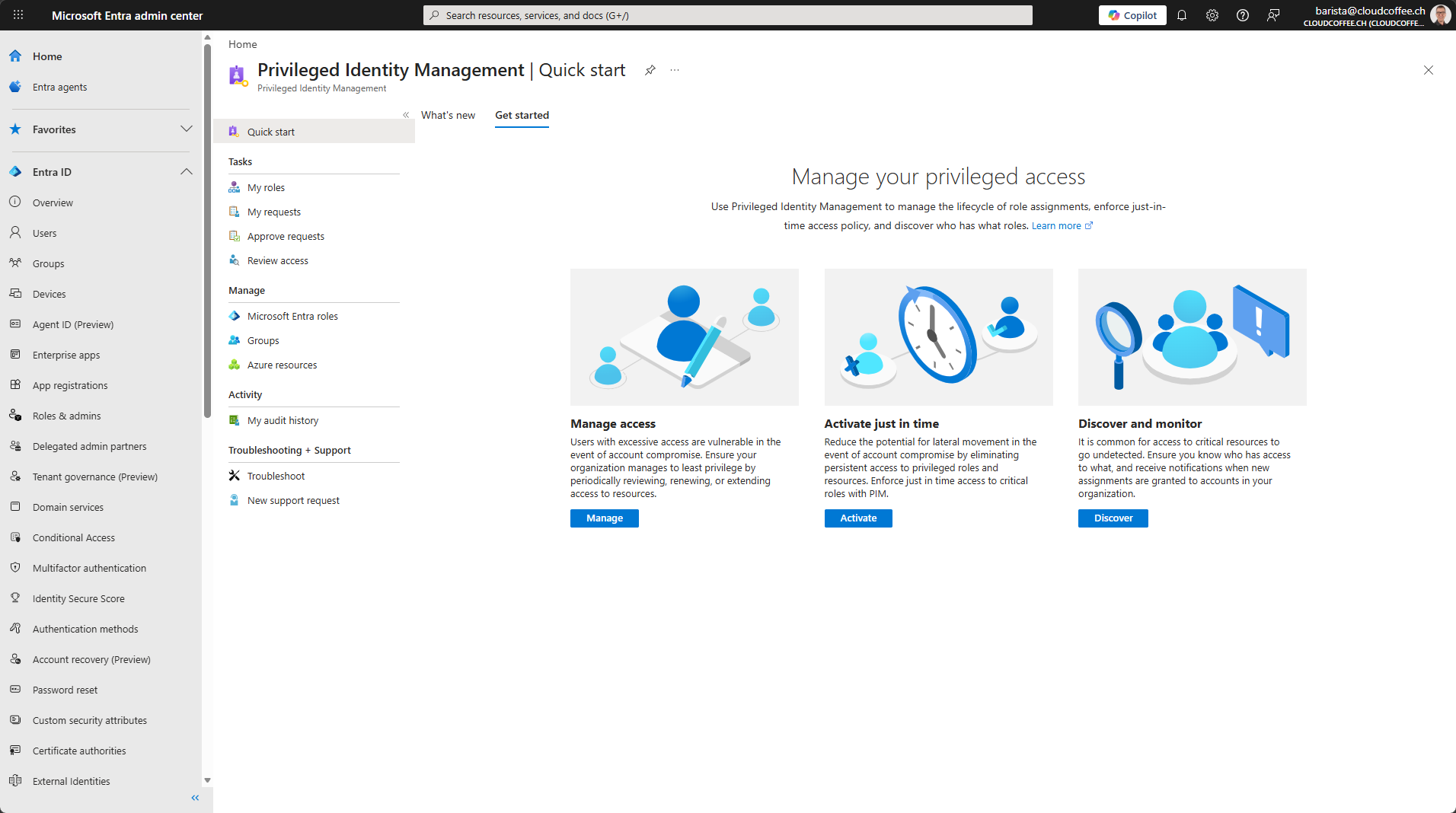
After selection, cmd.ms opens the corresponding portal or blade in a new browser tab.
Use Shortcuts Directly from the Browser Address Bar
cmd.ms allows direct access to a specific Microsoft portal oder blade from the browser address bar by entering a shortcut URL. The shortcut URLs follow this format:
- {command}.cmd.ms
- cmd.ms/{command}
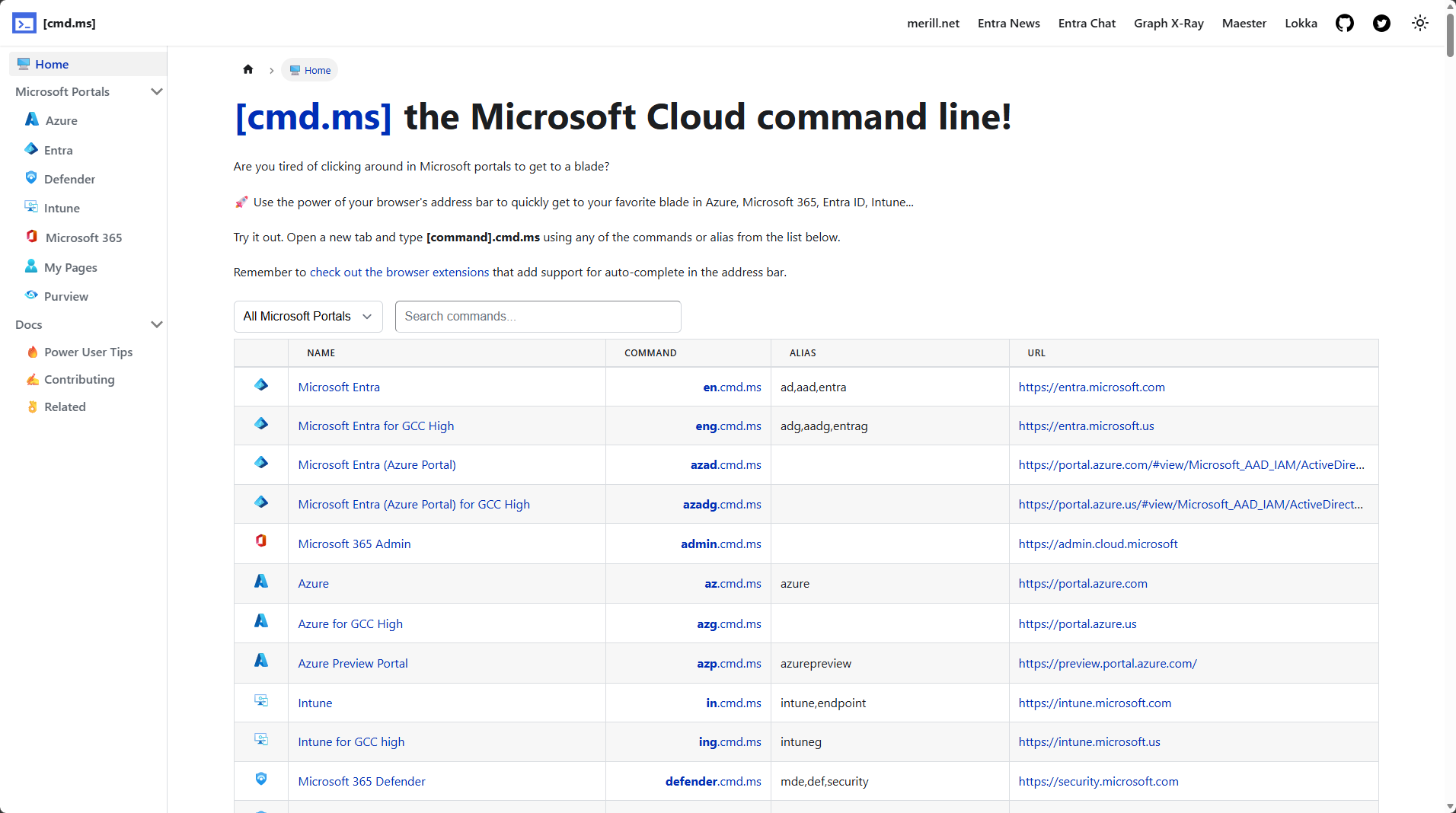
An overview of the available shortcuts can be found in the docs: https://cmd.ms/docs/
Shortcuts are sorted by portal: Microsoft Azure, Microsoft 365, Microsoft Entra, Microsoft Defender, Microsoft Intune and Microsoft Purview.
An overview of available shortcuts is provided in the documentation: https://cmd.ms/docs/.
Shortcuts are organized by portal, including Microsoft Azure, Microsoft 365, Microsoft Entra, Microsoft Defender, Microsoft Intune, and Microsoft Purview.
Examples:
- Azure Virtual Desktop: https://azavd.cmd.ms
- Authentication methods: https://enauth.cmd.ms
- Microsoft Intune Apps: https://inapps.cmd.ms
- Defender Incidents: https://deincidents.cmd.ms
Using the Browser Extension
The browser extension integrates directly into the browser address bar and enables interactive command selection without requiring commands to be memorized. It provides a quick search interface in the address bar for matching commands.
Extensions are available for the following browsers:
After installation, cmd.ms adds a dedicated keyword to the browser address bar.
Usage is entirely keyboard-driven.
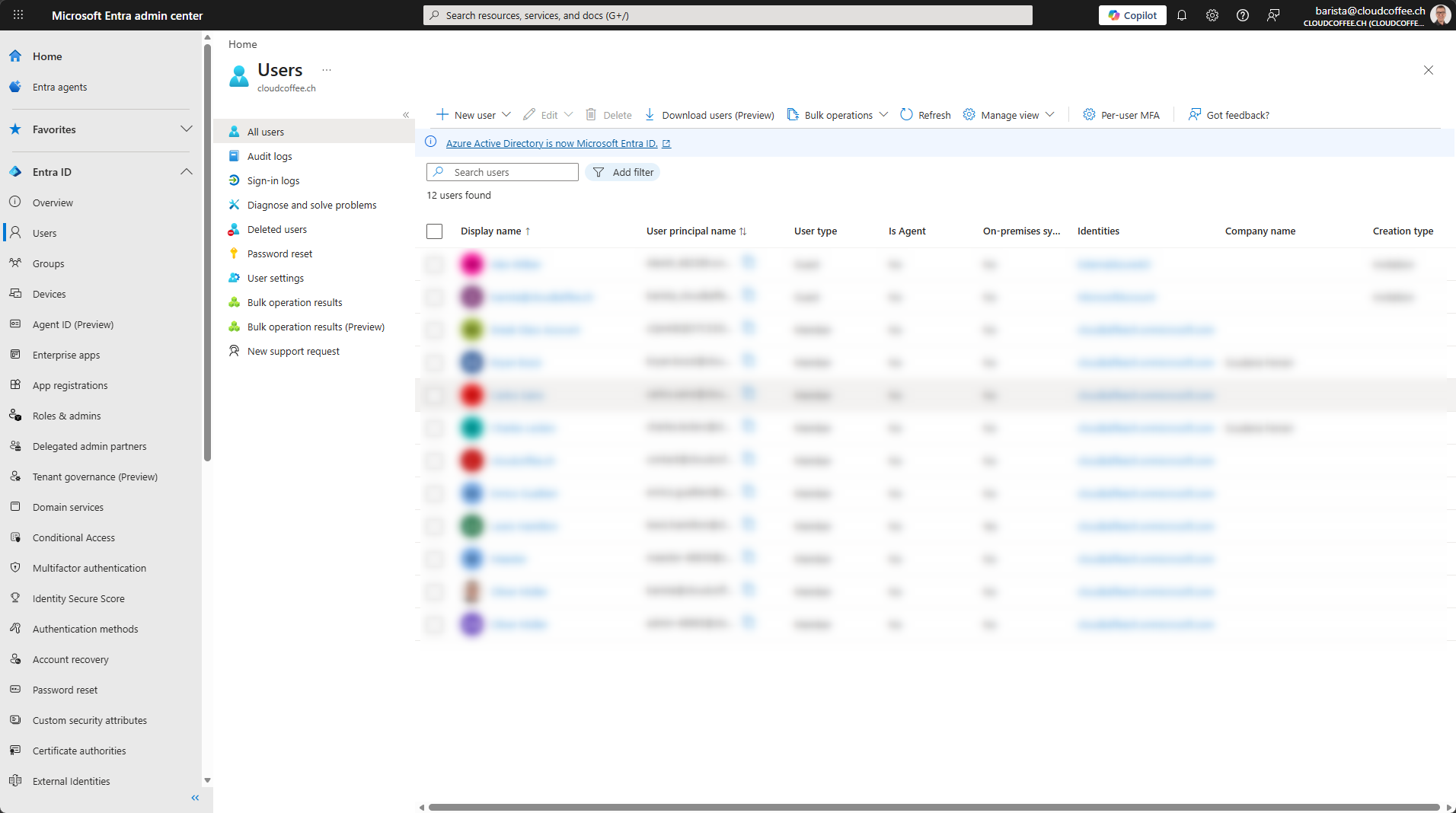
The following example shows access to the Users blade in the Microsoft Entra admin center:
- Enter c followed by the space bar
- Enter the desired command, for example adusers
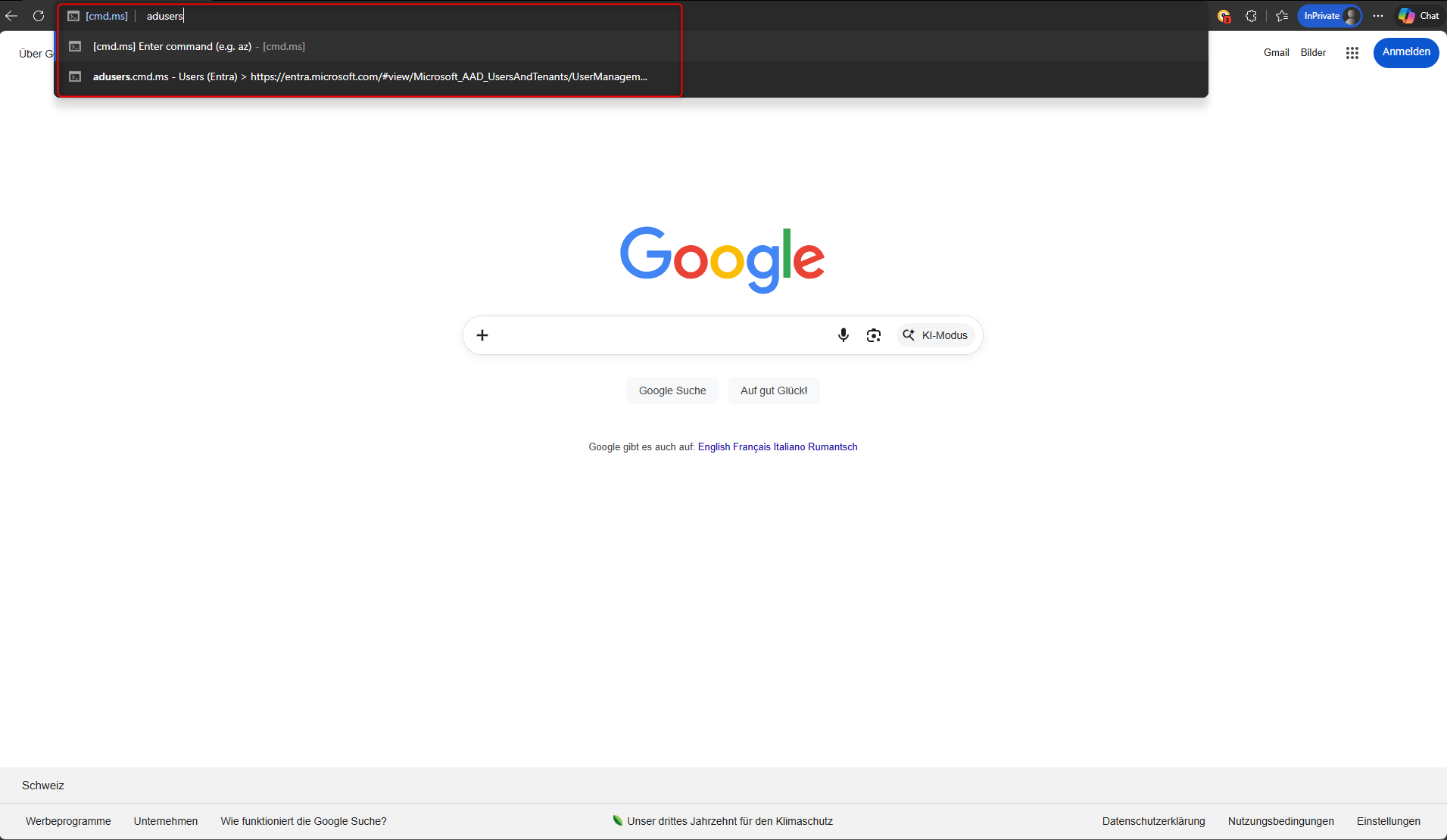
cmd.ms now opens the Users blade in the Microsoft Entra admin center.
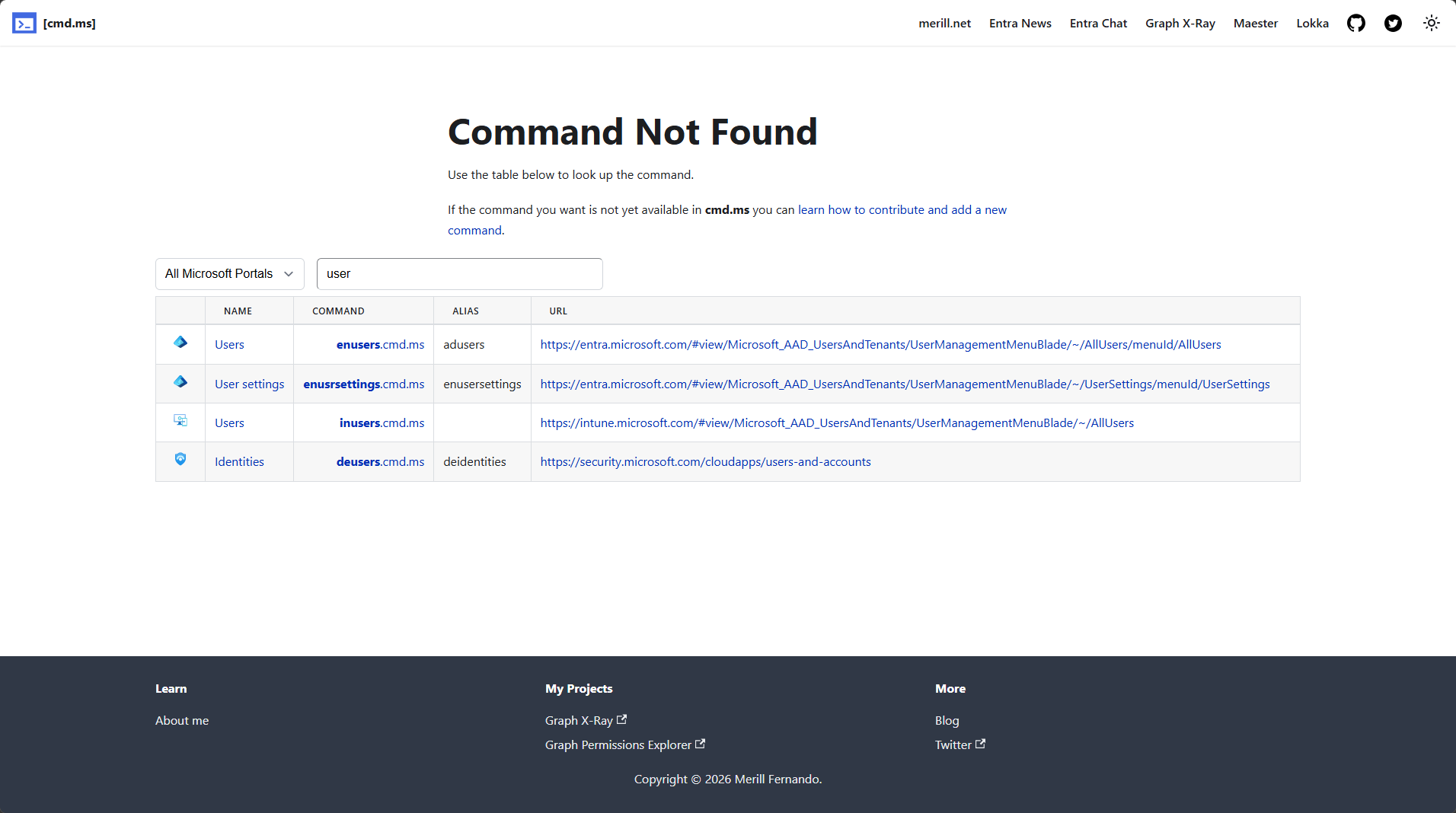
As you type, cmd.ms automatically displays matching suggestions. If no suggestion is selected and the input is confirmed with Enter, cmd.ms displays an overview of available commands.
Conclusion
As a Microsoft Cloud command line, cmd.ms significantly simplifies access to Microsoft Cloud portals and blades. Instead of navigating through multiple layers, users can open them directly via shortcuts or the browser address bar. This results in a clear efficiency gain, especially for repetitive tasks and frequent context switching. cmd.ms is a simple tool that can be easily integrated into day-to-day operations.
Fresh content, explained with practical relevance. Stay up to date via LinkedIn and Bluesky.


No marketing. No noise. Just content.
If this post was helpful, a coffee brings back the rich aroma behind the writing.